The first time I seriously took note of surrealist Mexican artist Diego Rivera was while watching the 2002 film “Frida” directed by Julie Taymor and starring Salma Hayek. However, Mexican art has long been a favorite, mostly because of the rich, vibrant colors often used in it. I’m certain I even loved a few of Rivera’s paintings before I connected his name with his art.
More recently, when I learned that more than 130 of his works (Wow!) were coming to Crystal Bridges Museum of American Art in Northwest Arkansas, I knew I wanted to make plans to meet Diego in person.
And let me tell you, he don’t disappoint.
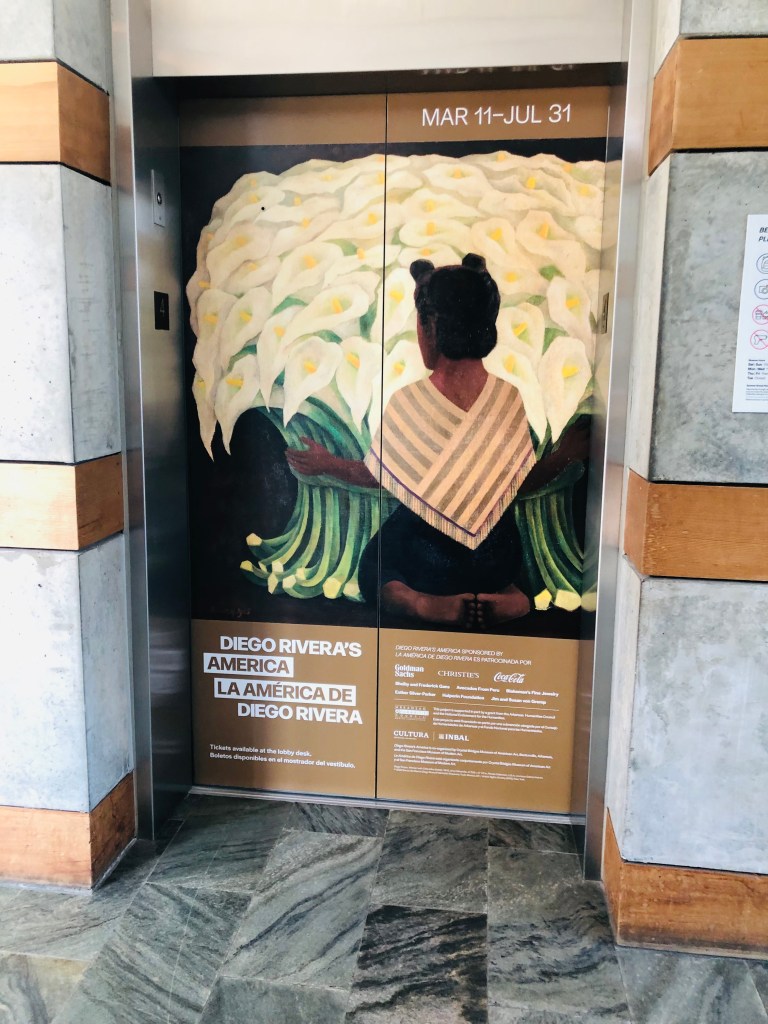
“Diego Rivera’s America” brings together more of Rivera’s works “than have been seen together since the artist’s lifetime.” And for art students, or those just interested in the process of art, seeing a broad cross-section of works, including working sketches, give the viewer a glimpse behind the scenes of Rivera’s artistic process. Something that I personally always find fascinating.
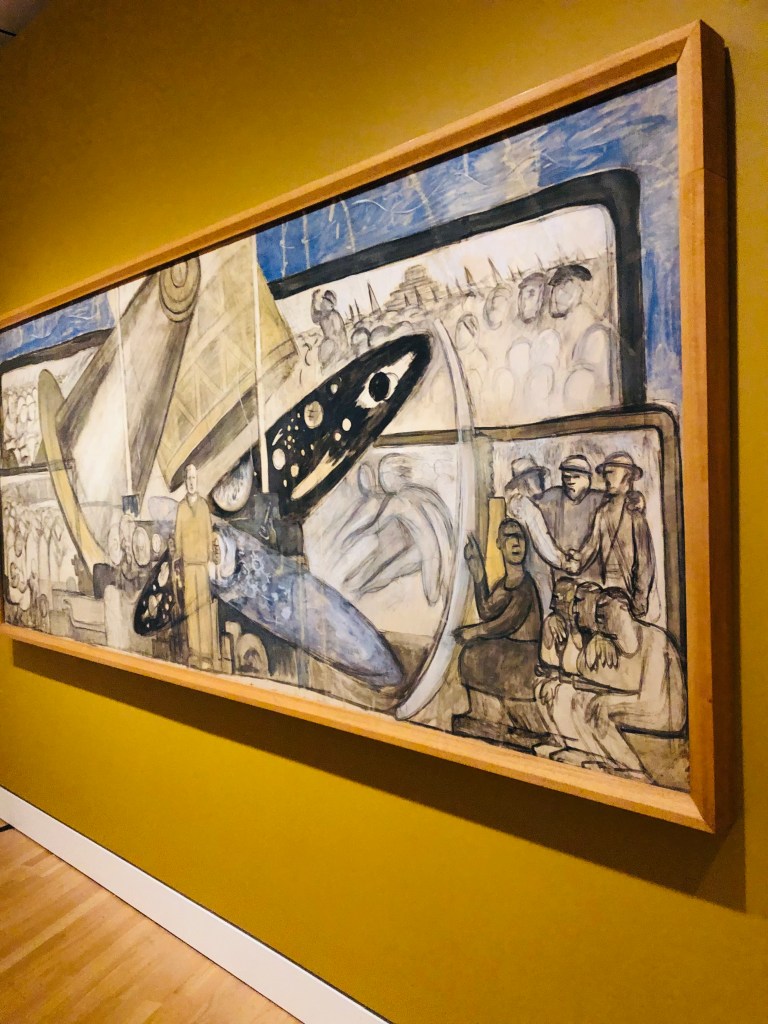
Also well-known for his murals, the curators have projected several of his most noteworthy onto the walls of the gallery. Benches and chairs are sprinkled throughout in strategic spots where one can pause and let the work percolate. During my visit, several folks were taking advantage of spending additional time with Diego.
Myself, I planned to spend an entire day at the museum … but alas, I failed to see the “Closed Tuesdays” notice on their website. I did manage to enjoy my “free” Tuesday including two long walks on the art trails around Crystal Bridges. BTW, If you visit, plan to spend extra time exploring the countless trails in the area, they are peaceful and enjoyable. I was staying at the 21C Museum Hotel which is situated only steps from the head of the main art trail. And there are numerous bike rentals available in the neighborhood if you have a mind to ride instead of walking.
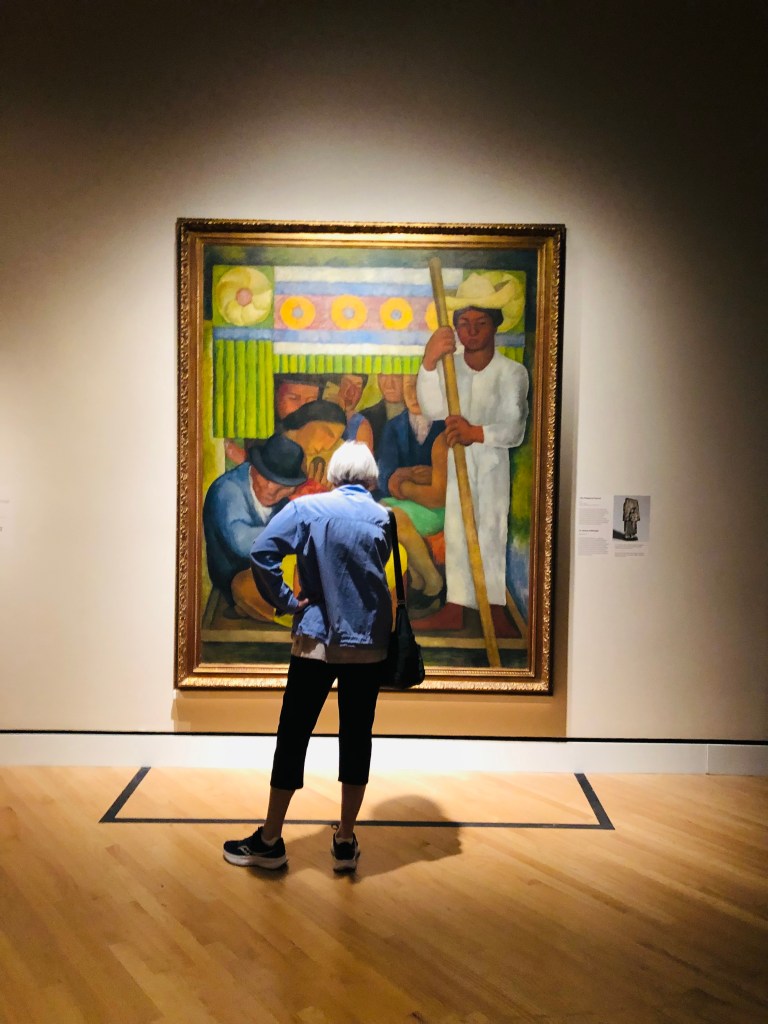
Back in the exhibit, I found myself most drawn to the three paintings by Frida (Rivera’s artist wife) which are also part of the exhibit. Because of my scheduling mix-up, I hastily buzzed through the exhibit making cellphone photographs of most of the artwork (yes, personal photos are allowed) so I could take my time later and examine them more closely. Then, I meandered back through the exhibit looking more closely at selected works. That’s when I discovered that among my favorites were the three works by Frida.
Rivera had been Frida’s mentor throughout much of her career, so her work is (not surprisingly) stylistically similar to his. But there always seems to be something more haunting about Frida’s work than Rivera’s … it almost demands your attention. There is a sadness that hangs in the air around Frida’s work.
Her three works are displayed on a dark red gallery wall, which cleanly separates them from Rivera’s work. I didn’t even notice the change of color on my first time through the gallery. The primary, central painting from Frida is a portrait of her and Rivera. The beautiful use of color makes the painting seem to float above the wall, begging for attention … and as you look closer into the composition make note that Rivera is the one holding the art pallet and brushes, the true artist as she seems to say, and she is merely a supporting character. Above Frida is a dove holding the message in Spanish: “Aquí nos veis, a mí, Frida Kahlo, junto con mi amado esposo Diego Rivera. Pinté estos retratos en la bella ciudad de San Francisco, California, para nuestro amigo Mr. Albert Bender y fue en el mes de abril del año 1931” Which translated means: “Here you see us, me Frida Kahlo, with my dearest husband Diego Rivera. I painted these pictures in the delightful city of San Francisco, California for our companion Mr. Albert Bender, and it was in the month of April of the year 1931.”
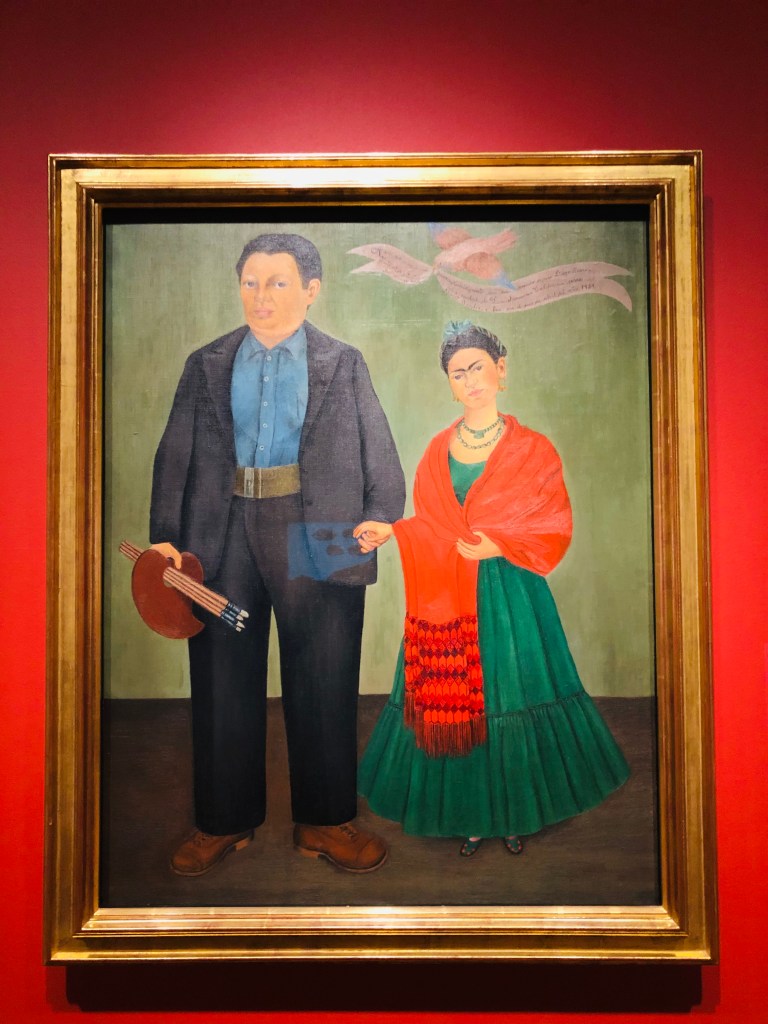
While the painting reveals Rivera as the “true” artist, Frida’s beautiful red rebozo (long scarf) is the star of the composition drawing the viewer to her lovely face. It’s worth noting that Frida’s head tilts toward Rivera. And naturally, her infamous unibrow is on full display.
Every painting in the exhibit is worth spending even more precious time with than I had available that particular morning. The exhibit contains countless beauitful large paintings like the Calla Lillies Vendor which is featured in most of the publicity for the exhibition. Painted in 1941 it portrays a young woman kneeling with a very large bundle of calla lilies. Her clothes are simple yet she is colorful and neatly portrayed like a typical young woman of Mexico in the early 20th century. It’s a lovely painting. Even more lovely in person.
It’s worth noting that Rivera was a member of the Communist Party and created many popular political murals throughout Mexico that often included attacks on the ruling class, the church and capitalism. Rivera was selected to paint a mural for New York’s new Rockefeller Center. Ultimately the theme he selected for the mural became too “subversive” and the incomplete mural was ordered chipped off the wall by the Rockefeller family. There are so many stories that surround Rivera it makes his art even more interesting.

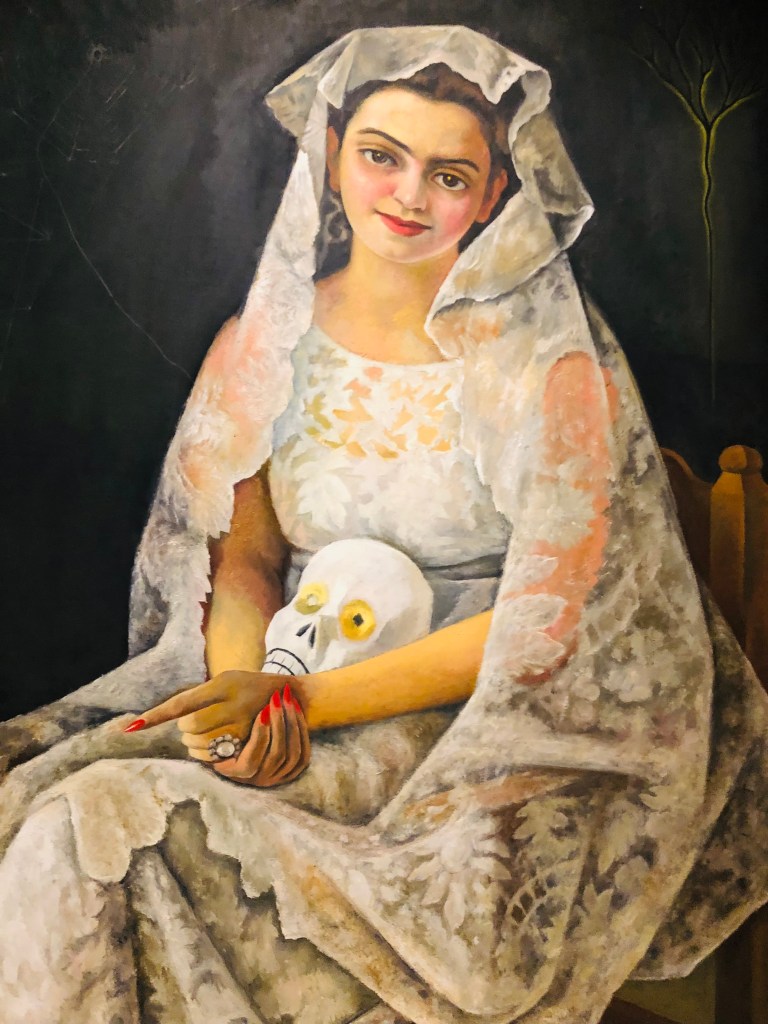
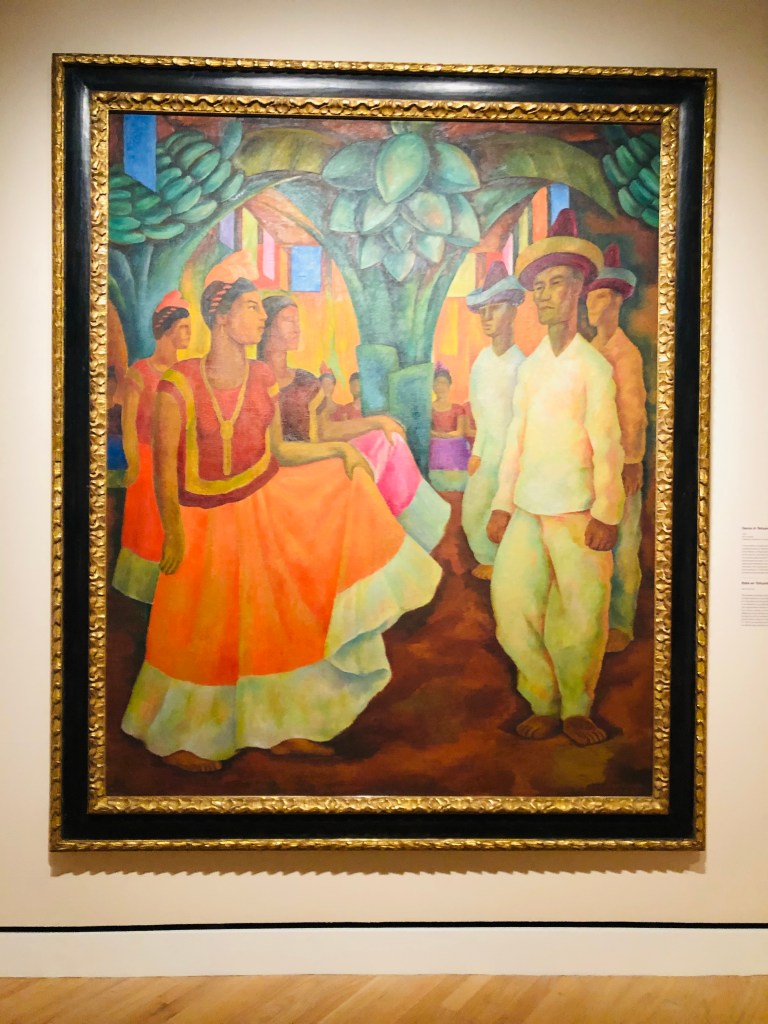
So, to sum it up, seeing the exhibit is certainly worth your time. Diego Rivera’s America runs through July 31, 2023 at Crystal Bridges Museum of American Art in Bentonville, Arkansas. Take a day and check it out … just don’t go on a Tuesday!
 The Struggle to Be Known
Great overview of your day and experience. In case I don’t get there by the scheduled date, I am so enlightened by your comments and insights. Interesting! I hope to make it! ☝️
LikeLike
Thank you JoAnn!
LikeLike